Written By Glen Scott
As candidates campaign for leadership of the Chicago Board of Education, the discussion has centered on familiar issues: budgets, school closings, academic performance, public safety, labor relations, and politics. These are all important concerns, but they share one common characteristic—they are largely responses to today's problems.
What is missing from this election is a conversation about tomorrow.
Chicago needs a 20-Year Education Vision.
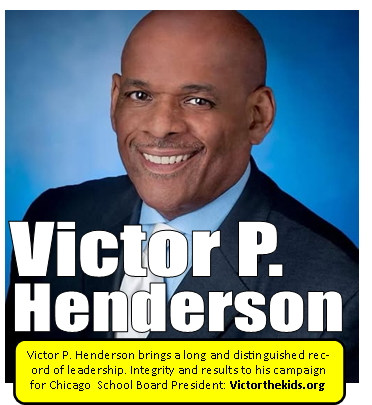
This is not a campaign platform for one candidate. It is not an endorsement of Victor P. Henderson, Sean Harden, or any other candidate seeking office. It is a challenge to every candidate and, ultimately, to the next President of the Board of Education.
The President serves a limited term. Students do not.
A child entering kindergarten this year will not complete the educational journey for nearly two decades. That child will inherit a world shaped by technological innovation, artificial intelligence, changing workforce demands, and challenges we cannot yet fully predict.
If we begin with one simple question—
"What kind of graduate should Chicago produce twenty years from now?"
—many of today's debates begin to align.
Budget decisions become investments rather than annual crises.
Curriculum becomes a roadmap rather than a collection of individual programs.
Technology becomes preparation for the future rather than a short-term expense.
Teacher development becomes part of building long-term excellence.
School facilities become investments in the next generation.
Partnerships with businesses, colleges, and community organizations become essential to preparing students for the economy they will inherit.
A 20-year vision does not eliminate disagreements. It provides a common destination.
Every Board President would still establish priorities during his or her term. Every administration would still respond to unexpected challenges. But each would also be responsible for advancing a shared vision that belongs to the people of Chicago—not to a political party or a single elected official.
Perhaps the greatest contribution the next President of the Chicago Board of Education could make is not solving every problem within one term. It is beginning a process that allows Chicago to think beyond election cycles and focus on the generation now entering our schools.
Leadership is not only about managing today's challenges. It is also about preparing tomorrow's citizens.
That may be the missing conversation in this election—and the foundation for a stronger Chicago Public Schools for generations to come.
Add comment
Comments